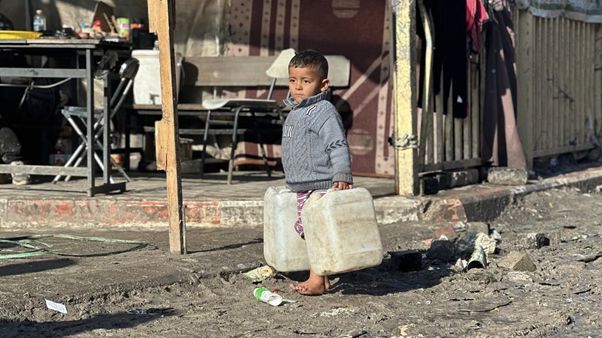


GAZA: Aid officials warn that winter rains in Gaza threaten to unleash a deluge of sewage on to hundreds of thousands of displaced people living in tents more than a year into Israel’s invasion of the Palestinian enclave.
Winter in Gaza, which begins around November and lasts until February, is the rainiest spell of the year, exacerbating chilly conditions in which temperatures can drop as low as 8C.
Around 1.9mn of Gaza’s 2.3mn residents have been displaced during Israel’s ferocious onslaught conducted in retaliation for the Hamas-led October 7 attack on Israel last year.
They have little protection against the elements. More than 1mn people live in tents in the sandy al-Mawasi coastal area in southern Gaza where the lack of a sewage system has forced many to use pits in the ground as toilets. Severe Israeli restrictions on aid convoys have also led to shortages of winter essentials such as warm clothes and blankets.
The UN has estimated that about half a million people across Gaza are in flood-prone sites that could be overrun with effluent once the rains start, said Louise Wateridge, a spokesperson for UNRWA, the main UN agency working in Gaza.
“When it rains, sewage is going to pile up in lower [elevation] areas,” she said. All displaced people “are using some kind of makeshift toilet and essentially trying to just get the sewage away from their shelter. But that doesn’t mean it’s not accumulating near somebody else’s or on the street.”
Hassan Abdallah, who has been displaced five times since he left his home in north Gaza at the start of the war, lives in a leaky tent with nine family members in Mawasi.
He said he had to dig holes 1.5 metres into the sand to use as latrines. He fears not just that rain will drench the family’s makeshift shelter but that overflowing sewage will ruin their meagre belongings such as mattresses and cause disease.
Hassan Abdallah’s tent in Gaza needs to be waterproofed, which would cost up to $800 © Video provided to the FT
The shortages of goods have led to exorbitant prices for essentials. The number of aid trucks coming in fell to an average of 37 a day in October — compared with 500 a day before the war, according to the UN.
Armed gangs have also developed lucrative trades robbing incoming trucks and reselling the supplies at prohibitive prices.
The price of blankets has soared, for example, ranging from $50 to $100 depending on size. Abdallah’s tent is now worn out and torn, and to waterproof it he needs four tarpaulins, which could cost as much as $800.
“I don’t earn much as a barber and no one else in the family has an income,” he said. “Mawasi is like a desert by the sea with no buildings to shield us from the wind. When winter arrives, I bet half the tents here will be blown away.”
Agencies